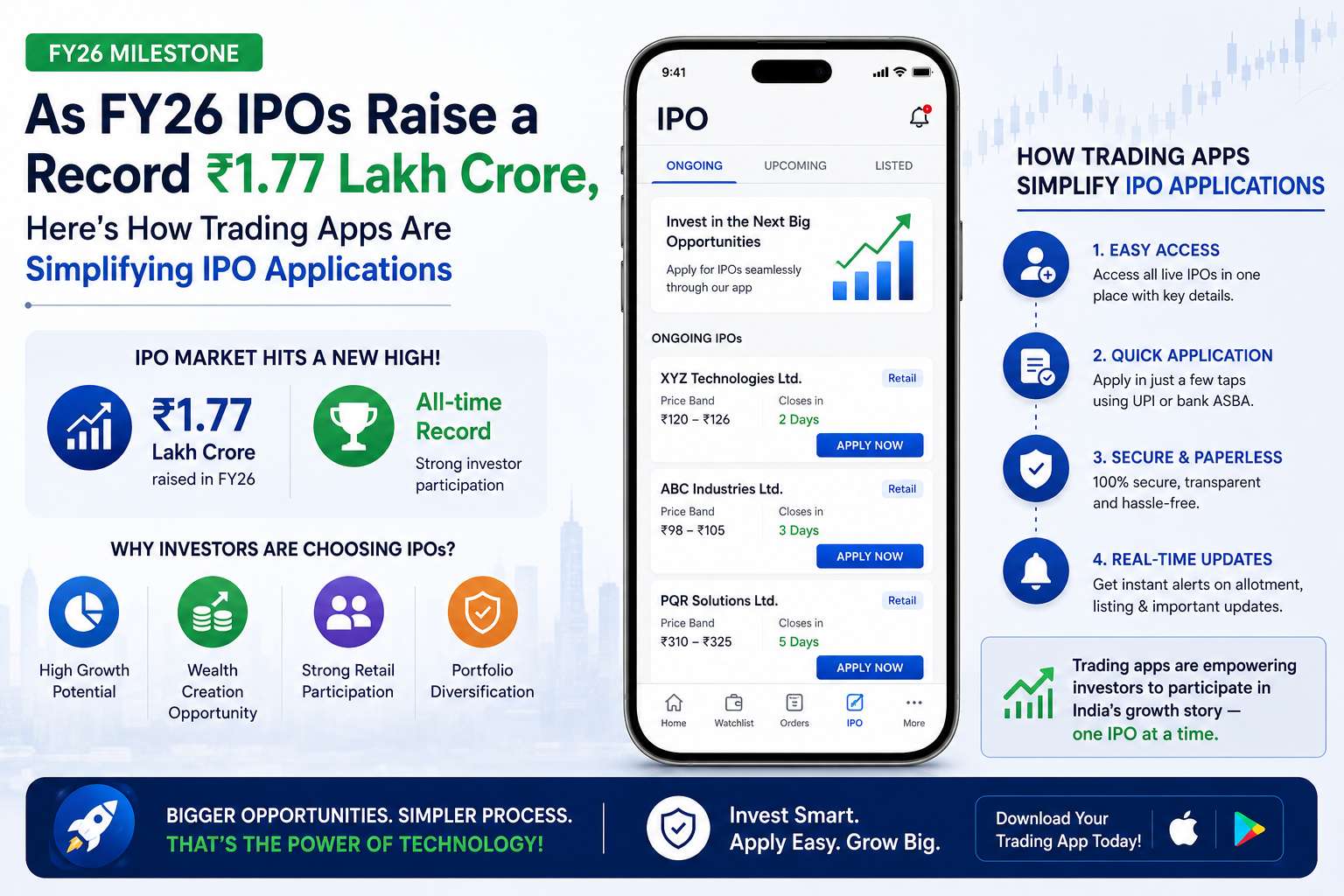
India’s IPO market has seen strong activity in FY26, with companies raising a record ₹1.77 lakh crore through public issues. The growing number of IPOs has also increased interest among retail investors who want a simpler way to track and apply for new issues. Earlier, applying for an IPO often involved visiting a bank branch or using separate online banking systems. Today, investors can complete much of the process through a trading app. From checking upcoming IPOs to placing bids and tracking allotment status, the process has become easier to manage from one place with apps like 5paisa.
IPO Applications Have Become More Accessible
A trading app can bring IPO information and the application process onto a single digital platform. Investors can check ongoing and upcoming issues, review basic details, and decide whether an IPO suits their investment approach. Investors can select an IPO, choose the number of lots, enter their bid, and submit the application through the supported process.
For example, the 5paisa app is designed to give investors access to several market and investment services from one platform. This can help users manage activities such as investing, IPO applications, and market tracking without moving between multiple platforms.
The convenience matters when several IPOs are open around the same time. Instead of searching separately for issue dates and application options, investors can use an app to monitor available opportunities more easily.
How the Digital IPO Application Process Works
The application process generally follows a few simple steps:
1. The Company Shares the IPO Details
Investors can view the IPO that is currently open and review important details. These may include the price band, lot size, issue dates, and other information available on the platform.
2. Investors Specify the Quantity
The investor selects the number of lots they want to apply for. The app calculates the approximate application amount based on the selected quantity and bid price.
3. Application Details are Provided
The investor provides the necessary application information, including a valid UPI ID where required.
4. The IPO Application is Submitted
After reviewing the details, the investor submits the application through the platform. The application is then processed through the prescribed IPO mechanism.
5. The UPI Mandate is Approved
For eligible UPI-based applications, the investor receives a request to block the required amount. The investor must approve the mandate through their UPI app to complete the process.
Why an IPO Investment App Can be Useful
The main benefit of an IPO investment app is convenience. Investors can check relevant IPO information and apply without depending entirely on physical forms or branch visits. It can also make tracking easier. IPO dates are important because an application must be submitted within the issue period. Having information and application options in one place may help investors stay organised.
Digital platforms can also reduce the number of steps involved in the application journey. However, investors should carefully review their application details before submitting them.
A smooth application process should not be the only reason to invest. Before applying, investors should consider the company's business, financial position, risks, valuation, and reasons for raising money.
Trading Apps Support More than IPO applications
An IPO application is only one part of an investor's market journey. After listing, investors may want to track the newly listed stock along with their other investments.
This is where an intraday trading app or a broader market platform can serve a different purpose. Such apps are designed to help users access market data and place trades during market hours, subject to the features and services offered by the platform.
However, IPO investing and intraday trading are different activities. An IPO investor may hold shares for the long term or sell after listing, while intraday trading involves buying and selling securities within the same trading day. Investors should understand these differences before choosing an approach.
Using one app, like 5paisa, for multiple market activities may provide convenience, but each decision should be based on the investor's objectives and risk tolerance.
Convenience Does Not Replace Research
The rise of digital applications has made IPO participation easier, especially for investors who prefer mobile-based investing. Still, an easy application journey does not mean every IPO is suitable for every investor.
Before applying, investors must consider questions such as:
- What does the company do?
- How has its financial performance changed?
- Why is the company raising funds?
- What are the major business and industry risks?
- Does the valuation appear reasonable?
- Does the investment fit personal financial goals?
Conclusion
As FY26's IPO fundraising reaches a record of ₹1.77 lakh crore, retail investors have more opportunities to participate in the primary market. Digital platforms are helping simplify the application journey by bringing IPO information, bidding, and tracking features closer together. Apps such as 5paisa can support investors who want a convenient way to access market and investment services. Still, technology only simplifies the process. The investment decision remains the investor's responsibility.